

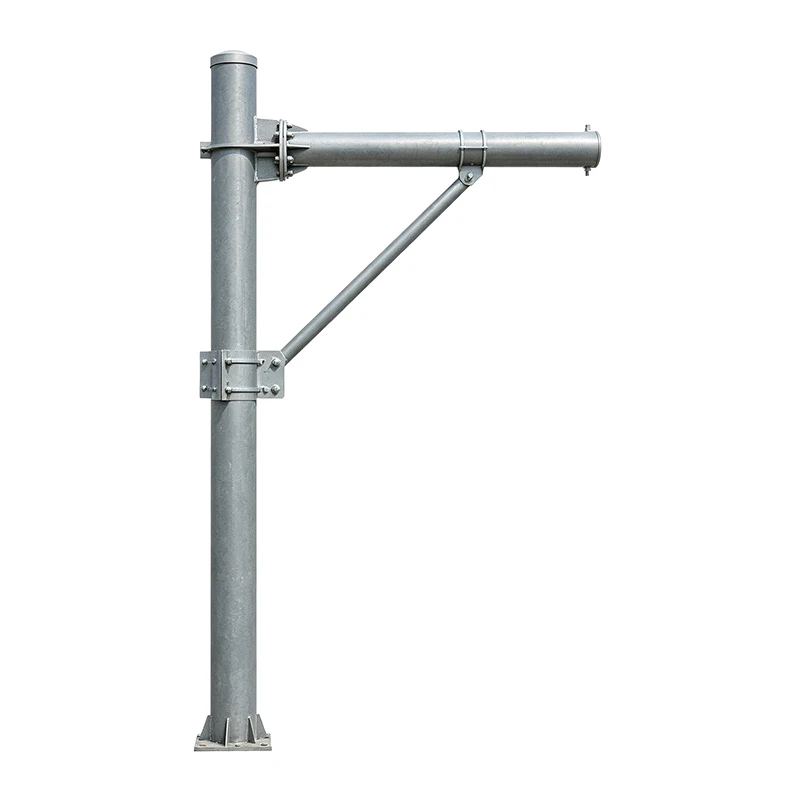
F-Type and T-Type Overhead Sign Support
A cantilever sign pole uses a main vertical post and one or more horizontal arms to position traffic signs above or close to the driving lanes. The common structural forms are the single-cantilever F-type and double-cantilever T-type.
An F-type structure is installed on one side of the road and extends in one direction. It is suitable for exit advance information, lane guidance, ramp merging areas, and large directional signs positioned over part of the roadway.
A T-type structure can extend toward two sides from the main post. It can support signs serving different directions or several lanes where the approved road layout requires a wider sign arrangement.
This product is especially useful where an ordinary roadside single post cannot provide the required sign position or viewing angle. Typical applications include highway exits, interchange sections, ramp merging areas, lane guidance locations, and roadside areas using large directional panels.
Main Post and Cantilever Dimensions
Common main post diameters include Φ273 mm, Φ325 mm, Φ377 mm, and Φ426 mm. The available main post wall thickness range is 6–12 mm.
The cantilever length can range from 3 m to 12 m. Common cantilever pipe diameters are Φ140–219 mm, while the total structure height is normally 6–9 m.
The steel components can receive hot-dip galvanizing treatment with reference to ISO 1461.
The main post diameter and wall thickness should not be selected only according to the cantilever length. Sign panel area, wind load, installation height, flange construction, stiffening plates, and foundation design should also be considered.
Before manufacturing a cantilever sign pole, the buyer should provide the structural drawing and foundation drawing or use documents approved by the project design team.
Direction and Connection Detail Review
Hongrong Traffic can manufacture the main post, cantilever arms, flanges, connecting plates, and stiffening components according to F-type or T-type structural drawings.
The technical team checks the direction of the cantilever, arm length, sign mounting holes, flange dimensions, and transport section plan. This review is important because an incorrect left or right direction can prevent the structure from matching its installation point.
The factory has cutting, welding, and hot-dip galvanizing capabilities. Customized products enter batch production after the first piece or key structural connections have been confirmed.
Production and inspection records can be managed according to the order. Buyers may arrange inspection after welding, before or after galvanizing, or before container loading. Independent inspection can also be used to check the material, dimensions, welding, and coating.
Sectional Transport and Site Assembly
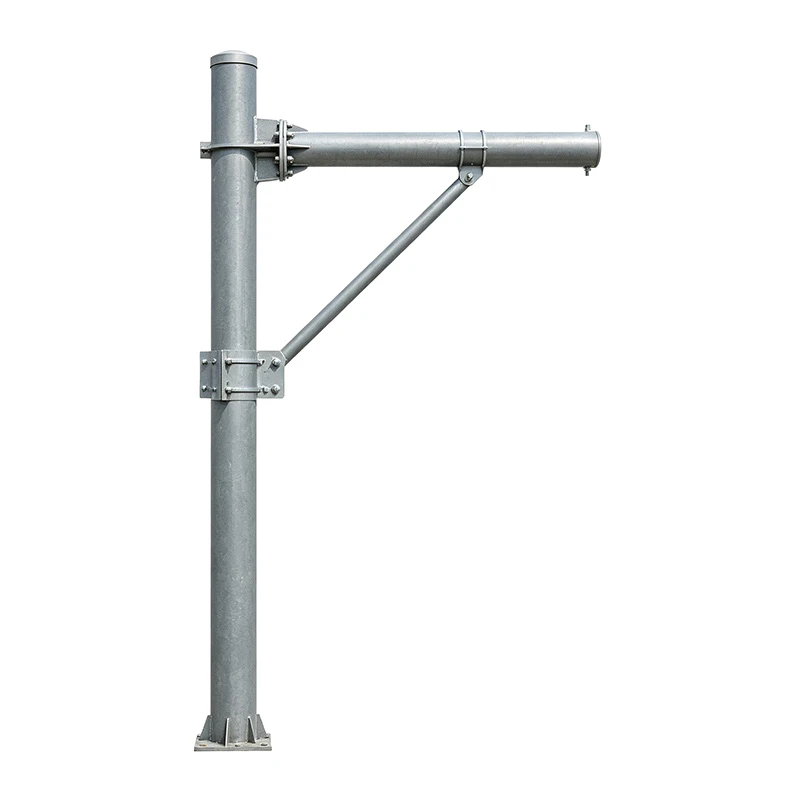
Because the cantilever sign pole may include long horizontal components, the structure is commonly divided into sections for transportation. The components can be connected on site through flanges or another project-specified assembly method.
The main post and cantilever arms are bundled separately. Flange surfaces and component ends receive additional protection. Bolts, connecting plates, and smaller accessories are packed in separate boxes.
Each set can be marked according to the installation point. Photos and videos may be provided during production, and large projects can use batch delivery.
Before installation, the foundation bolts, flange hole spacing, and cantilever direction should be checked. This reduces the risk of installation delays caused by civil foundation deviations or reversed component orientation.
Product Specifications
|
Parameter |
Product Configuration |
|
Structural Forms |
Single-cantilever F-type or double-cantilever T-type |
|
Main Post Diameter |
Φ273, Φ325, Φ377, or Φ426 mm |
|
Main Post Wall Thickness |
6–12 mm |
|
Cantilever Length |
3–12 m |
|
Total Structure Height |
6–9 m |
Hot Tags: cantilever sign pole, China cantilever sign pole manufacturers, suppliers, factory


