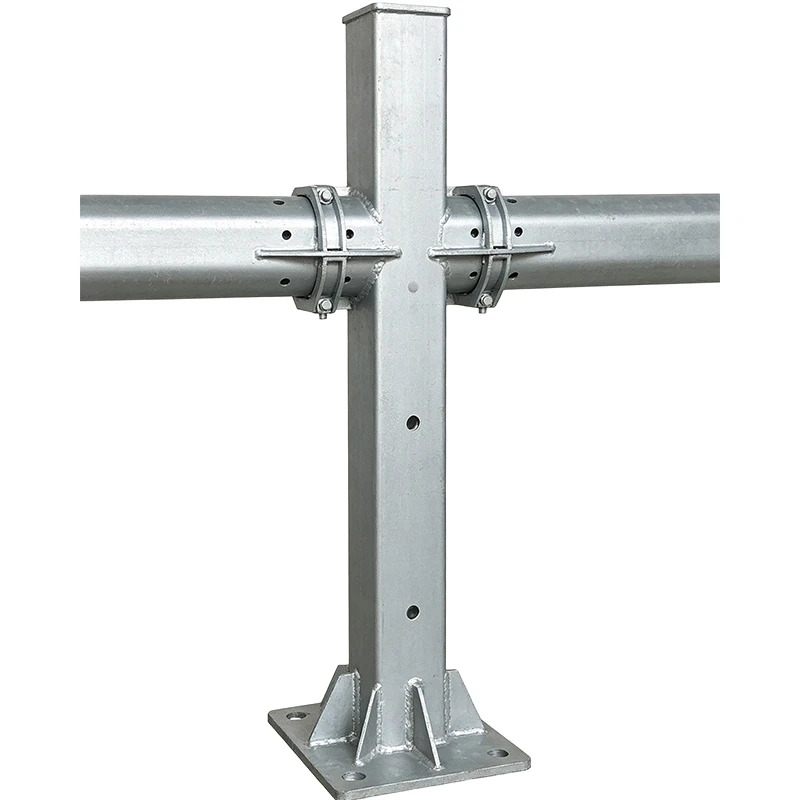
Traffic sign pole classification: Traffic sign poles are generally classified into single-pole and multi-pole types.
The inner edge of a pole-mounted sign should not encroach on the road construction clearance, and is generally no less than 25cm from the outer edge of the carriageway, sidewalk, or shoulder. The height of the lower edge of the traffic sign from the road surface is as follows: no less than 5500mm for highways, and no less than 5000mm for national and provincial highways. When installed on urban roads with a high proportion of small vehicles, the height of the lower edge from the ground can be adjusted according to the actual situation, but should not be less than 120cm.
When installed on the side of the road where pedestrians and non-motorized vehicles are present, the installation height should be greater than 180cm.
Single-pole traffic sign pole: A single-pole traffic sign pole has the sign panel mounted on a single pole. It is suitable for medium and small-sized warning, prohibitory, and instruction signs, as well as small directional signs.
Multi-pole traffic sign pole: A multi-pole traffic sign pole has the sign panel mounted on two or more poles. It is suitable for rectangular instruction or directional signs.
Cantilever Traffic Sign Poles – F-type and T-type Traffic Sign Poles: Cantilever traffic sign poles have the sign panel mounted on a cantilever, and the lower edge of the sign should be higher than the road's prescribed clearance height.
Cantilever traffic sign poles are suitable for the following situations:
1. Difficulty with post-type installation;
2. Wide roads with high traffic volume, where large vehicles in the outer lane obstruct the view of smaller vehicles in the inner lane;
3. Limited visibility or line of sight;
4. Aesthetic requirements.
Gantry Traffic Sign Poles – Traffic Gantry Pole: Gantry traffic sign poles have the sign mounted on a gantry, and the lower edge of the sign should be higher than the road's prescribed clearance height.
Gantry-type traffic sign poles are suitable for the following situations:
1. Multi-lane roads (leading to three or more lanes) requiring separate lane direction indication;
2. High traffic volume where large vehicles in the outer lanes obstruct the view of smaller vehicles in the inner lanes;
3. Road sections where traffic weaves, diverges, or flows at high speeds, such as: closely spaced signs at interchanges, or the main line area of interchanges where highways intersect;
4. Space constraints make pole-mounted and cantilever installation difficult;
5. Exit ramps are on the left side of the driver's reaction time;
6. Aesthetic requirements.
Attached traffic sign poles are attached to overpasses and nearby structures. They are classified into two types based on the location of the attached panel: carriageway attached and roadside attached.
The installation height of attached signs should comply with GB3.12.1 and GB3.12.3. If the sign support structure is located within the roadside clear zone, it should ensure that it does not pose a hazard to vehicles leaving the road; otherwise, a stepped efficiency structure or appropriate protective and warning facilities should be used.
Use and Maintenance:
1. The installation (adjustment) of road traffic signs should be completed before the completion and opening of new (reconstructed, expanded) roads. Related signs on roads connected to the new (reconstructed, expanded) road in the road network should also be adjusted and improved simultaneously.
2. When road traffic conditions change, the installation of relevant signs should be adjusted promptly. Highway numbers and city road names should be used as much as possible to help road users understand their route and location.
3. Signs should be cleaned and maintained regularly. During use, signs should be protected from obstruction by trees or obstructed by streetlights.
4. The shape and color of signs should comply with the provisions of this section during their service life.