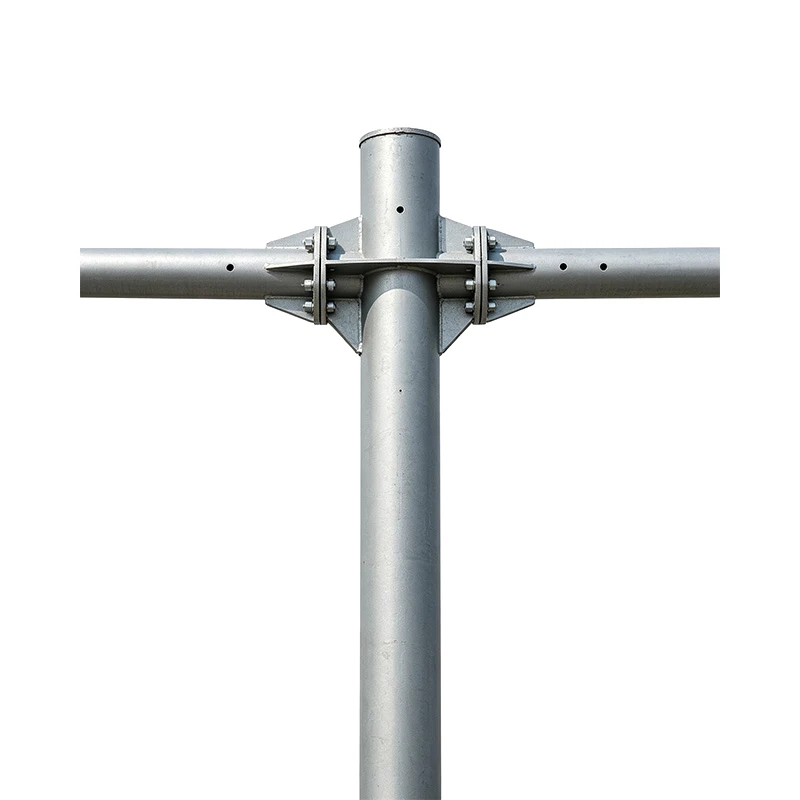
In modern society, signposts, as an important component of infrastructure, are widely used in roads, parks, public places, and other areas, serving to indicate, guide, and warn. Among them, hot-dip galvanized signposts, due to their excellent durability and corrosion resistance, have become the preferred choice for many applications. This article will systematically introduce the processing of hot-dip galvanized signposts, from material selection and processing technology to quality control, helping readers better understand the manufacturing process of this product.
Material Selection and Pretreatment
The processing of hot-dip galvanized signposts begins with material selection. Typically, the main material of the signpost is high-quality low-carbon steel. This type of steel has good plasticity and weldability, meeting the needs of subsequent processing. The thickness and specifications of the steel need to be determined according to the specific use and load-bearing requirements of the signpost to ensure sufficient strength and stability in actual use.
After the material is cut and shaped, strict pretreatment is required. Oil, rust, and impurities on the steel surface are removed mechanically or manually. Subsequently, an acid pickling process is used to further clean the surface. The pickling solution is usually a diluted hydrochloric acid or sulfuric acid solution, which can effectively dissolve oxide scale and residues. After pretreatment, the steel needs to be rinsed with clean water and dried to ensure a clean and uncontaminated surface, laying the foundation for the subsequent hot-dip galvanizing process.
Core Steps of the Hot-Dip Galvanizing Process
Hot-dip galvanizing is a crucial step in the manufacturing of marker poles. Its purpose is to form a uniform and dense zinc-iron alloy layer on the steel surface, significantly improving the pole's corrosion resistance. The process mainly includes the following steps:
Immersing the pretreated steel into molten zinc. The temperature of the zinc bath must be precisely controlled within a suitable range to ensure sufficient reaction between the zinc layer and the steel substrate. The immersion time depends on the thickness and specifications of the steel, typically ranging from several minutes to over ten minutes.
During the immersion process, the zinc bath undergoes a metallurgical reaction with the steel surface, forming a multi-layered zinc-iron alloy layer. These alloy layers not only have good adhesion but also effectively block external moisture, oxygen, and corrosive substances. After immersion, the pole is slowly removed from the zinc bath, and excess zinc is removed by centrifugation or vibration to ensure a uniform and smooth zinc layer on the surface.
After galvanizing, the signposts require cooling. Cooling methods can be natural or water cooling, depending on the process requirements. The cooled surface should have a silver-gray luster, the zinc layer thickness should meet relevant standards, and there should be no defects such as incomplete galvanizing or blistering.
Post-processing and Surface Treatment
After hot-dip galvanizing, the signposts undergo a series of post-processing steps. According to design requirements, the signposts are drilled, welded, and assembled. These processes must be strictly performed according to the drawings to ensure the signposts' dimensions and shape are accurate.
Welding is a crucial step in post-processing. Welds must be uniform and strong, without any incomplete or faulty welds. After welding, the weld seams should be ground to ensure a smooth and even surface, consistent with the rest of the signpost.
Surface treatment of the signposts also includes processes such as spraying and printing. For example, a special coating can be sprayed onto the galvanized layer to further enhance its weather resistance and aesthetics. The paint color is usually chosen based on the requirements of the usage environment; common colors include white and gray. The printed content includes directional text and graphics, requiring the use of weather-resistant inks to ensure long-term visibility of the markings.
Quality Control and Testing Standards
Quality control of hot-dip galvanized sign poles is maintained throughout the entire processing. From material warehousing to finished product delivery, each step requires rigorous inspection. Raw materials must meet relevant standards, including the chemical composition and mechanical properties of the steel. During pretreatment and hot-dip galvanizing, process parameters, such as pickling solution concentration and zinc bath temperature, must be checked regularly to ensure they are within reasonable ranges.
Quality inspection of the galvanized layer is paramount. Thickness gauges are typically used to measure the zinc layer thickness to ensure uniformity and compliance with standards. Adhesion tests and corrosion resistance tests are also conducted to verify the actual performance of the zinc layer. For welded areas, non-destructive testing, such as ultrasonic testing, is required to ensure the weld seams are free of internal defects.
The dimensions, shape, and surface appearance of the finished sign poles must also be inspected individually. Any poles that do not meet requirements must be reworked or discarded to ensure the reliability and safety of the final product.