

Hey there! As a supplier of w-beam guardrails, I often get asked about the typical spacing between posts for w-beam guardrails. So, I thought it'd be cool to dive into this topic in a blog post and share all the ins and outs with y'all.
First off, let's talk a bit about what w-beam guardrails are. You can check out some of our products on these links: Galvanized Highway Guardrail, W Beam Safety Barrier, Guardrail Thrie Beam, W-Beam Highway Guardrail, and Powder-Coated W-Beam Guardrail.
W-beam guardrails are a common sight along roads, highways, and other traffic areas. They're designed to protect vehicles and passengers by deflecting and absorbing the impact of a collision. These guardrails are made of steel in a distinctive W-shaped cross-section, which gives them strength and flexibility.
Now, onto the main question: what's the typical spacing between posts for w-beam guardrails? Well, there isn't a one-size-fits-all answer. The spacing can vary depending on several factors.
Factors Affecting Post Spacing
1. Traffic Volume and Speed
Areas with high traffic volume and high speeds usually require closer post spacing. Why? Because vehicles traveling at high speeds generate more kinetic energy when they hit the guardrail. Closer post spacing gives the guardrail more support, allowing it to better withstand the impact and prevent vehicles from breaking through. In such high-speed, high-traffic zones, you might see post spacing as close as 6 to 8 feet.
2. Terrain
The terrain where the guardrail is installed plays a big role. On flat and straight roads, the load on the guardrail is more evenly distributed when a vehicle hits it. So, you can often get away with a wider post spacing, say 10 to 12 feet. But on hilly or curved roads, the impact forces are less predictable. Vehicles hitting the guardrail on a curve or a slope put more stress on specific parts of the rail. In these situations, you'll likely need to use closer post spacing, like 6 to 8 feet again, to ensure the guardrail stays in place and does its job.
3. Soil Conditions
The type of soil where the posts are being installed matters too. In firm, stable soil, the posts can be set deeper and more securely. This means they can support a w-beam guardrail with a relatively wider post spacing. However, in soft or loose soil, the posts aren't as firmly anchored. To compensate for this reduced stability, the posts need to be placed closer together, perhaps around 6 feet apart, to maintain the overall strength of the guardrail system.
4. Design Requirements
Different regions and projects may have specific design requirements for w-beam guardrails. Some local transportation departments or construction specs might mandate a certain post spacing based on safety standards or previous accident data in the area. For example, if an area has had a high number of serious accidents involving guardrail collisions, they might require closer post spacing to increase the guardrail's effectiveness.
Standard Spacing Guidelines
Despite the variations, there are some general guidelines that are commonly followed. In many standard highway installations in the United States, a post spacing of 10 feet is a popular choice. It's a good balance between cost, ease of installation, and providing sufficient support for the w-beam guardrail.
When designing a guardrail system, engineers will first analyze all the factors mentioned above. They'll use computer simulations and engineering calculations to determine the optimal post spacing. They want to make sure that the guardrail can handle the expected impact forces without causing excessive deformation or collapse.
Installation Considerations
Once the post spacing has been determined, proper installation is crucial. The posts need to be driven or bored into the ground to a sufficient depth. Usually, a depth of 2 to 3 feet is recommended, but this can also vary depending on soil conditions and the height of the guardrail.

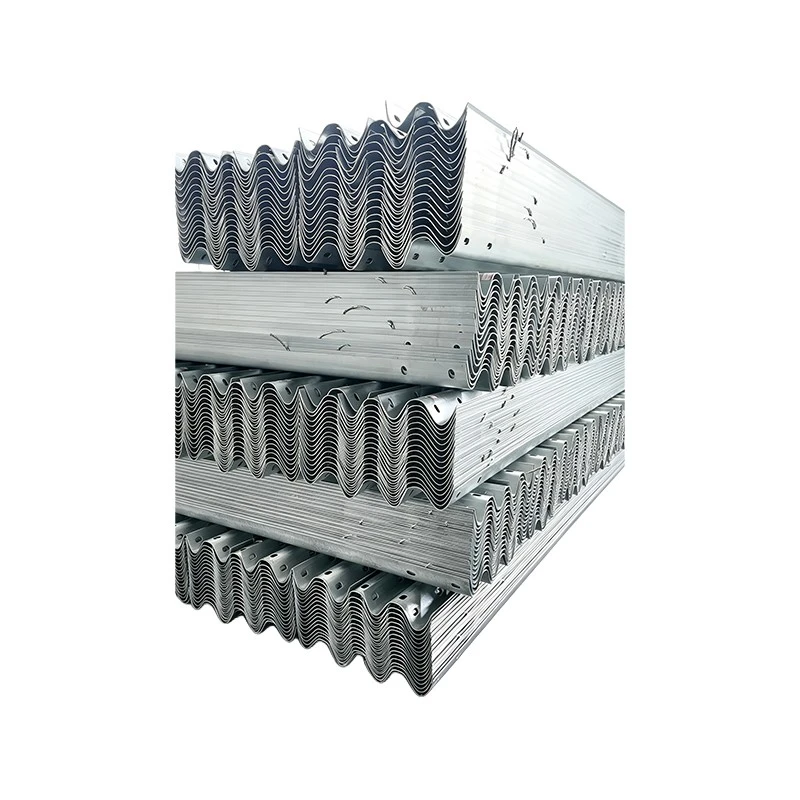
After the posts are in place, the w-beam guardrail sections are attached to the posts using bolts or other fasteners. It's important to make sure these connections are tight and secure so that the guardrail can function as a single, integrated system.
Maintenance and Inspection
Regular maintenance and inspection of w-beam guardrails are essential. Over time, factors like weather, vehicle impacts, and soil movement can cause the posts to shift or the guardrail to become damaged. Inspectors should check the post spacing during routine inspections to make sure it hasn't changed. If posts have become loose or moved out of position, they need to be corrected or replaced to maintain the integrity of the guardrail.
Why Choose Our W-Beam Guardrails?
At our company, we understand all these factors that go into determining post spacing for w-beam guardrails. We offer high-quality guardrails made from the best steel materials. Our products are designed and manufactured to meet or exceed industry standards, no matter what the post spacing requirements are for your project.
Whether you need Galvanized Highway Guardrail for its corrosion resistance, W Beam Safety Barrier for added safety features, or any other type of w-beam guardrail from our range, we've got you covered.
Contact Us for Your Guardrail Needs
If you're involved in a project that requires w-beam guardrails and you're not sure about the right post spacing or which product to choose, don't hesitate to reach out. We have a team of experts who can help you with all your questions and concerns. We'll work with you to understand your project requirements and provide the best solutions. Contact us today to start the conversation about your w-beam guardrail procurement.
References
- AASHTO (American Association of State Highway and Transportation Officials). "AASHTO Roadside Design Guide." This guide provides in - depth information on the design and installation of roadside safety features, including w - beam guardrails and post spacing.
- Federal Highway Administration (FHWA). Various reports and regulations on highway safety infrastructure, including guardrails, that offer insights into industry best practices for post spacing.